 Shadow DirectorFrançais
Home › Guides › Running a football academy: promoting youngsters
Running a football academy: promoting youngsters
Every summer, new youngsters arrive. You decide which of them get a chance.
A batch every 1 July
On 1 July, your academy takes in new youngsters. You can let them mature, promote them to the first team from age 17, or sell them. Each choice changes your budget and the relationship with the academy.
Level and staff
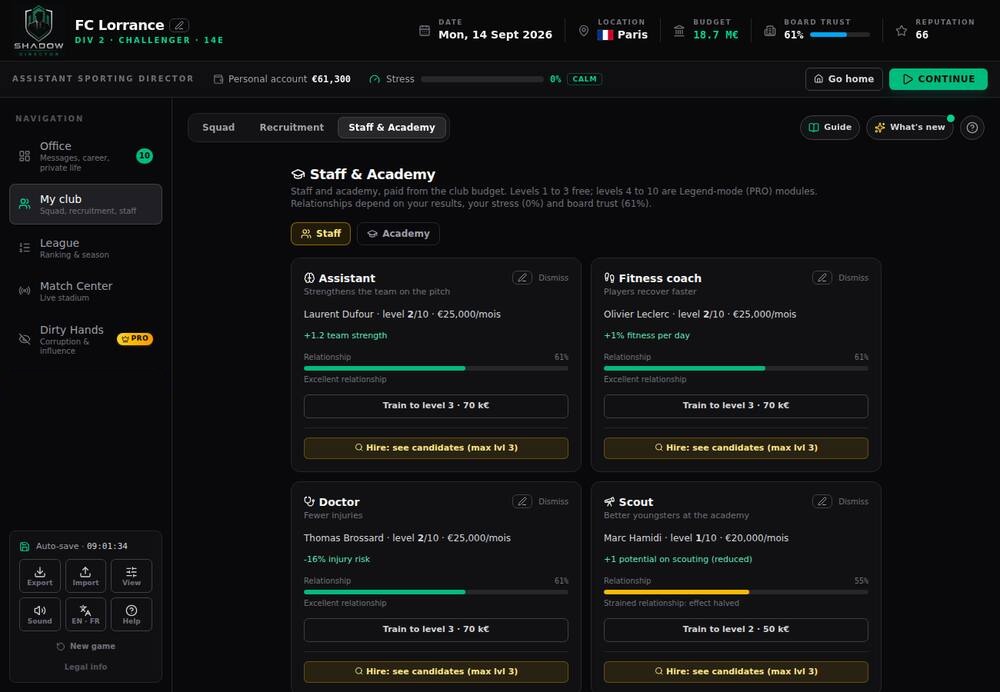
The academy level depends on your investment: from level 4, its modules are part of the paid tiers. A youth coach is one of the eight staff roles.
Why it matters
A well-trained youngster costs less than a transfer and can become a key player, or a great sale. See running a small club.
The three summer decisions
| Decision | Effect |
|---|---|
| Let him mature | The youngster progresses without a pro wage |
| Promote to the first team | Possible from age 17; he joins the squad (28 maximum) |
| Sell | Brings budget, at the right time |
The academy’s monthly review
On the first Monday of each month, the assistant details the group’s progress (rising, falling, stagnating) and the youth coach presents the academy’s next wave. You answer with a choice: congratulate, start an individual programme, promote a youngster… The academy’s level also counts: there are 10 levels, of which levels 4 to 10 belong to the PRO tier.
Academy or transfers?
A homegrown youngster costs less than a transfer but takes time. For a small club the academy is a pool of players and future sales. For a big club it complements recruitment. The two strategies combine: watch the wage cap and the 28-player limit.
Frequently asked questions
At what age can I promote a youngster?
From age 17.
Can I sell an academy youngster?
Yes, the sale brings money to the club.
When do the new youngsters arrive?
Every 1 July.
How many academy levels are there?
Ten, of which levels 4 to 10 belong to the PRO tier.