 Shadow DirectorFrançais
Home › Guides › What is a sporting director? Role and duties
What is a sporting director? Role and duties
Inside a club, this is the person who links the pitch, the money and the board. Here is what the job covers and how Shadow Director puts you in that seat.
A role at the crossroads of the club
The sporting director (also called director of football) does not coach the team and does not sign the cheques alone. They sit between three poles: the sporting side (coach, players, medical staff), the financial side (budget, wage bill, sales) and the board (chairman, directors). The job is to make sure all three move in the same direction.
In practice they agree a sporting project with the chairman, build the squad that can deliver it, propose the coach or make sure the relationship works, and answer for results and spending alike. A good sporting director is judged over several seasons: a good signing shows after months, a recruitment mistake weighs for a long time.
Day-to-day duties
- Recruit: follow the market, put the scouts to work, build target lists by position, then negotiate with clubs and agents.
- Manage contracts: extensions, wages, clauses, players leaving at the end of their deal, respecting a wage cap.
- Run the staff: assistant, fitness coach, doctor, scout, video analyst, physio, youth coach.
- Support the coach: keep the relationship healthy, settle disagreements, protect the dressing room without interfering in selection.
- Link with the board: report to the chairman, budget, objectives, crisis communication after a losing run.
- Represent the club: answers to the press, relations with supporters and sponsors.
Most of this happens through conversations: calls, meetings, messages. That is exactly what Shadow Director reproduces, in a virtual phone where requests arrive one after another.
How it differs from a head coach
| Head coach | Sporting director | |
|---|---|---|
| Horizon | The week, the match | The season, several years |
| Key decisions | Line-up, tactics, training | Recruitment, contracts, budget, staff |
| Counterparts | Players, technical staff | Chairman, agents, coach, press, clubs |
| Success measured by | Results on the pitch | The project, financial balance, squad value |
The two jobs complement each other and their tensions are classic: the coach wants a reinforcement now, the sporting director points to the budget. Knowing how to say no without breaking the relationship is a core skill.
Living it in Shadow Director
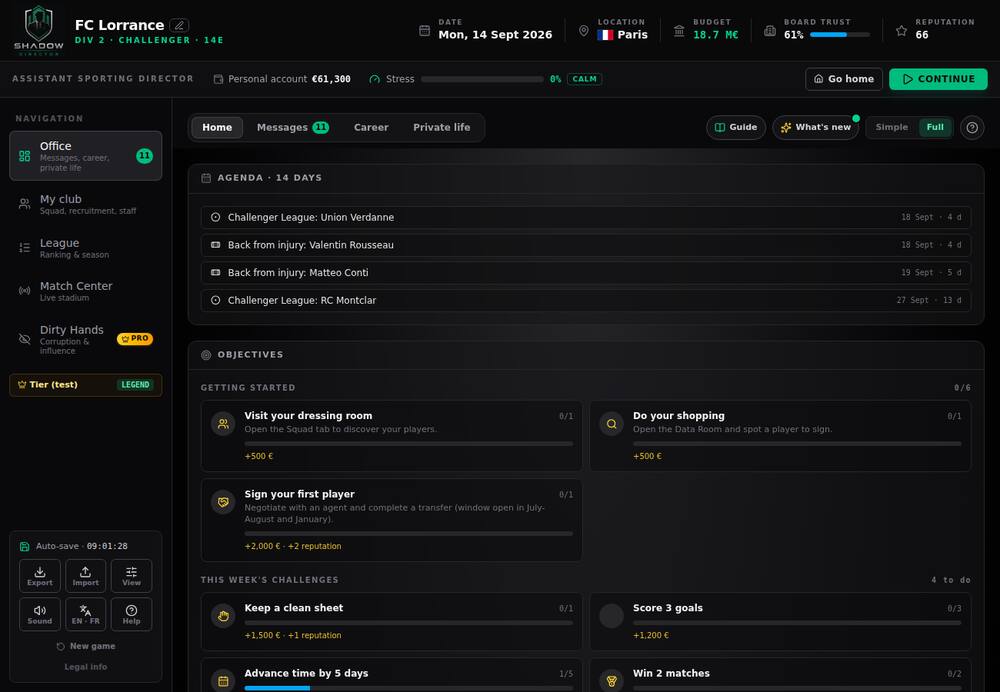
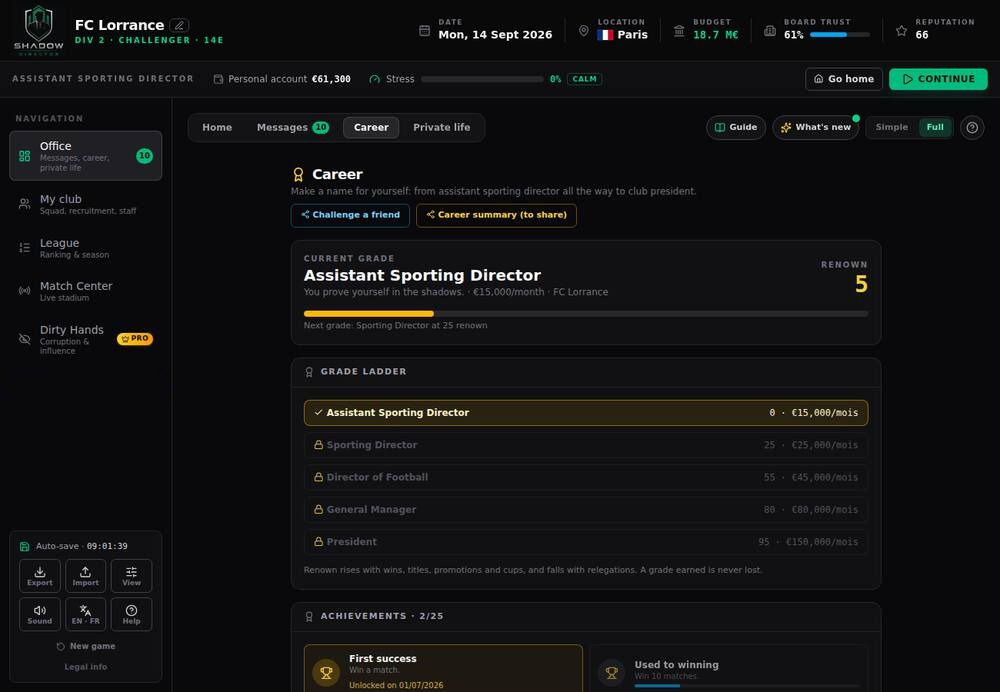
In the game you are the sporting director of a club of your choice. You start as assistant director and, season after season, you can rise to chairman by building your reputation. Two gauges watch you: board trust (at 0% you are sacked) and your stress (at 100% it is burnout).
The office gathers your agenda, messages and career log. Each day requests arrive: a player wants more playing time, the doctor reports an injury, the chairman asks for a situation report, a journalist wants an interview. You pick among several answers, or write your own, and the tone (friendly, neutral, aggressive) changes the reaction.
What you do not do
You do not pick the team: the coach plays the match with the squad you built. You can influence him by proposing a game plan (6 formations) or sending him a text during the match, but the final decision is his, depending on your relationship. This design choice is deliberate: it mirrors a job where you prepare, negotiate and take responsibility without touching the pitch.
A career path
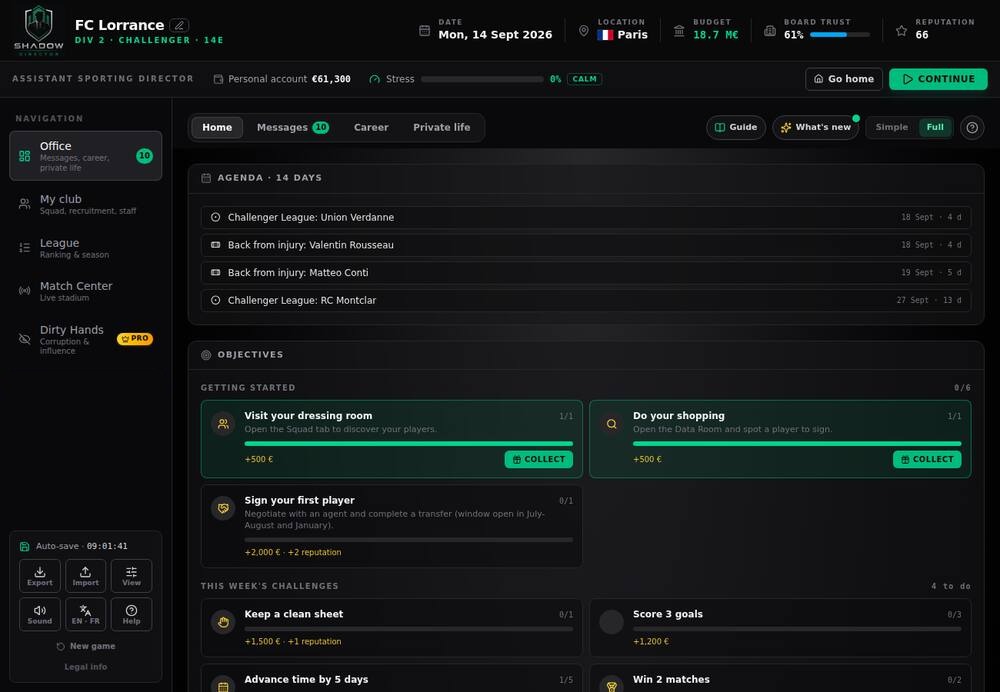
Your reputation grows with results, good decisions and objectives met. It raises your rank and attracts offers from other clubs after a good season. You can then change club, squad and league while keeping your rank. If board trust falls to zero, the game ends with a dismissal and a summary of your career.
Going further
To understand how recruitment works, read the transfer window explained and negotiating with agents. To try it, the base game is free and needs no sign-up.
Frequently asked questions
What does a sporting director do?
They build the squad, manage contracts and staff, link the coach and the board, and answer for the club’s sporting and financial policy.
Does a sporting director pick the team?
No. That is the head coach’s job. The sporting director prepares the squad and the framework.
Can you experience the job in a game?
Yes: Shadow Director puts you in that role, with recruitment, negotiation, budget, coach relationship and board trust.
What skills does it take?
Judgement of players, negotiation, financial management, composure under pressure and communication.