 Shadow DirectorFrançais
Home › Guides › The football transfer window: how it works
The football transfer window: how it works
Windows, market value, agents, deadline day: the market follows precise rules. Here are the principles and how the game puts them into practice.
Transfer windows
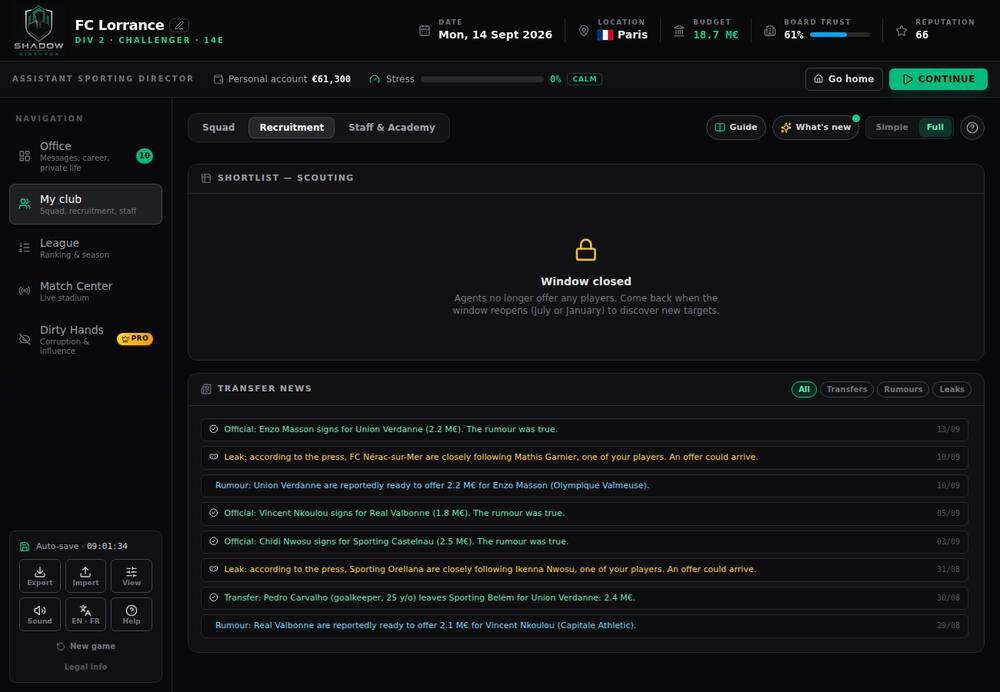
A club can only sign or sell in certain periods: the transfer windows. In the game they open in July, August and January. An email warns you at the opening, 7 and 3 days before the close, and at the close. Outside a window you can prepare (watch, contact, plan) but not conclude: selling a player, for instance, is only possible while the market is open.
The end of the window, Deadline Day, concentrates decisions: agents press, rivals move, rumours become real transfers. The game triggers urgent messages at that point to reproduce the tension.
From targeting to signing
A successful transfer is rarely improvised. It goes through steps that the game respects:
- Define the need: a position to fill, a player leaving, a wage ceiling.
- Build the target list: the shortlist, renewed every transfer window, with the radar and market value of each player.
- Target a position: the Recruitment Unit runs once per window to steer the search.
- Contact the agent and negotiate over several rounds.
- Close: the fee is taken from the budget and the player joins the squad.
The limits to respect
| Constraint | Effect |
|---|---|
| Budget | The fee is debited; you need enough funds |
| Wage cap | Total wages must stay under the limit |
| Maximum squad | 28 players; beyond that no signing |
| Open window | July, August, January: no closing outside it |
| Agent personality | Changes what works in the negotiation |
These constraints force trade-offs. An expensive striker can leave you without the margin to extend a key player. That is exactly the kind of dilemma a real sporting director faces.
Selling a player
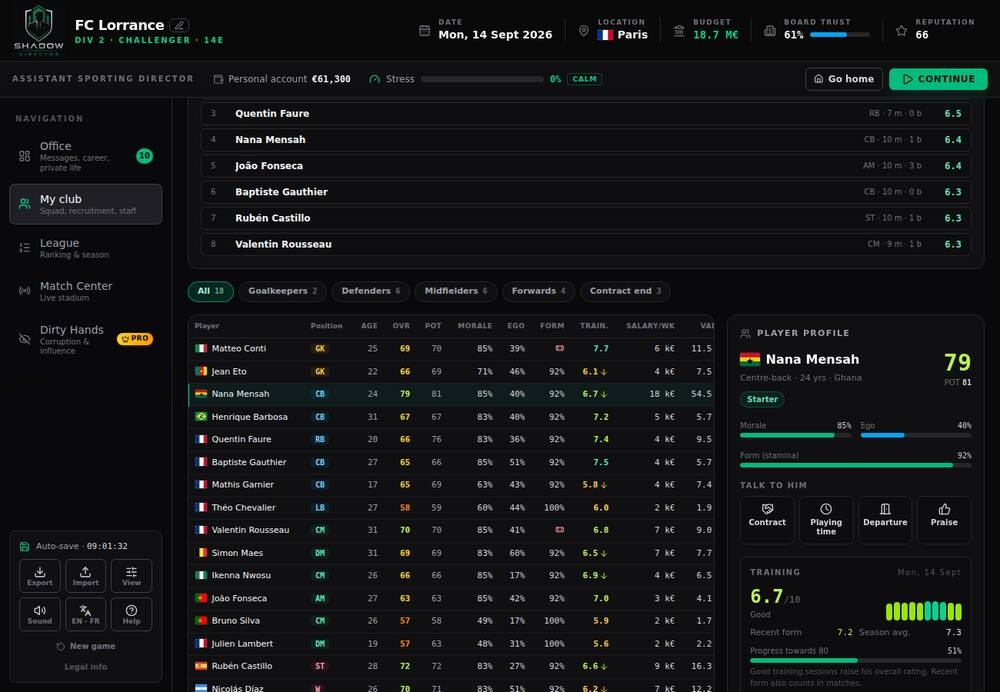
Selling funds arrivals, lightens the wage bill or ends a conflict. From the player card there are two options: Sell now (at market value minus 15%), or Transfer list, where you set an asking price between 50 and 200% of value. The higher the price, the fewer offers you receive. Offers arrive by email and you can accept, refuse or negotiate.
Extending a contract
Keeping a key player can cost less than replacing them. From their card, Offer an extension asks for a wage and a length, and the window shows the chance of agreement. A refusal lowers the player’s morale and blocks a new offer for 14 days, so calibrate the first one.
What the market does on its own
The market does not depend only on you. Asking prices move, offers arrive, rumours turn into transfers and rival clubs strengthen. A transfer news panel gathers moves, rumours and leaks. Injuries also slow plans: a player out for more than four days triggers a message from the medical service with a more or less costly and risky treatment choice.
Running a good window in the game
- Start from the squad: spot weak positions and expiring contracts before looking at the shortlist.
- Keep budget margin for the end of the window: opportunities and emergencies come late.
- Read the agent’s profile before answering: the same answer does not work on everyone.
- Do not neglect selling: a benched player costs a wage and earns no points.
- Think of the academy: a homegrown youngster costs less than a transfer.
Read next
The detail of talks with agents is in negotiating with agents. For the job itself: what is a sporting director?
Frequently asked questions
When does the window open in the game?
In July, August and January, with emails at the opening, before the close and at the close.
How many players can I have?
28 at most, within the wage cap.
Can I sell outside the window?
No, sales are only possible while the window is open.
At what price do I sell instantly?
At market value minus 15%.